
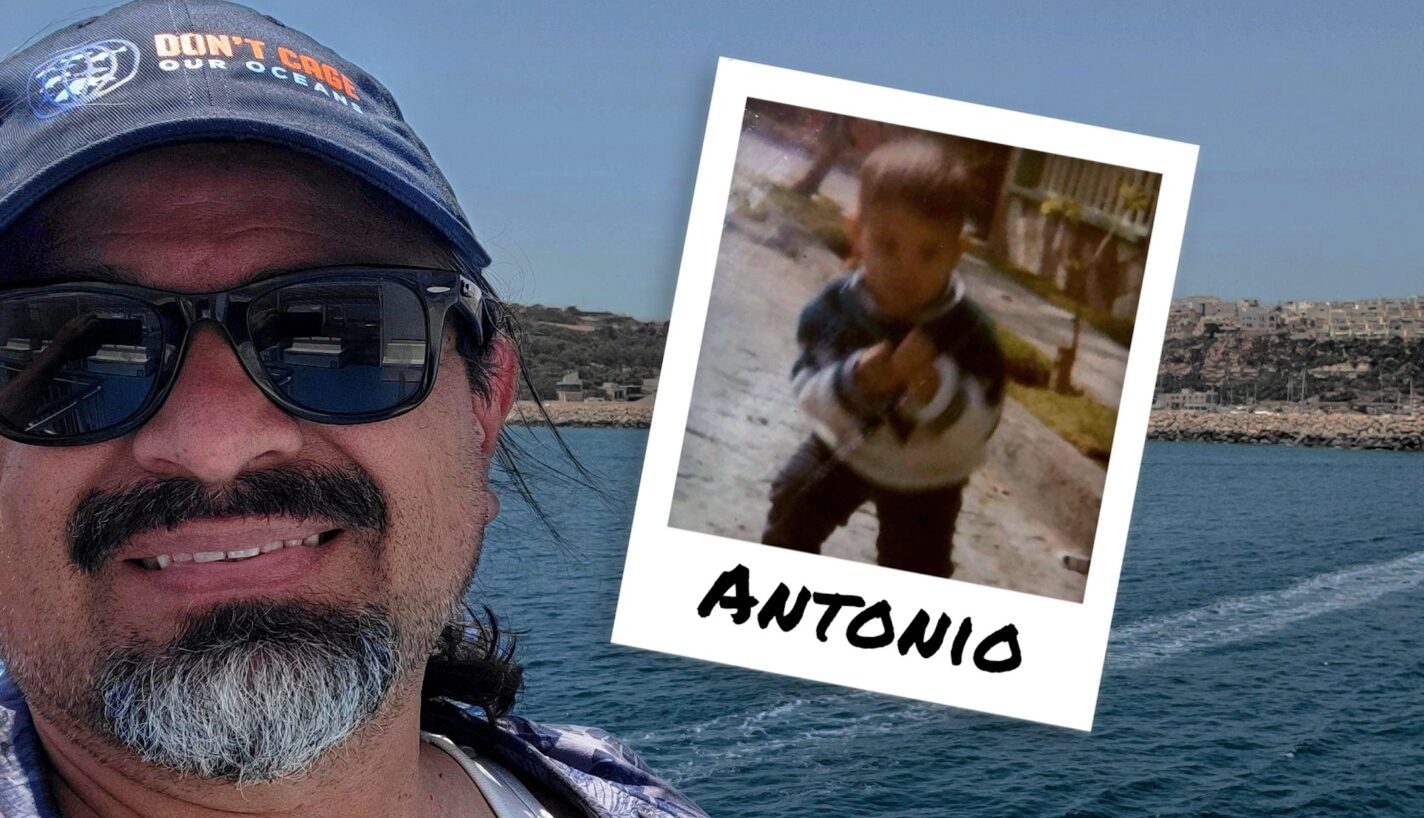
Hello everyone,
It’s a pleasure to introduce myself. I’m Antonio Tovar. I’ve been part of NAMA for a few months now, and am glad to finally connect with you all.
I serve as NAMA’s community organizer on aquaculture. In my role, I build relationships with small-scale aquaculture farmers, support the Aquaculture Atlas project, and engage with members of Don’t Cage Our Oceans.
To share a bit about my background, I was born in Mexico City — a second‑generation chilango — though my roots stretch farther than the capital. One grandparent was Zapotec from Oaxaca, another Nahuatl from Morelos. Like many Indigenous families of their generation, they didn’t pass down their languages to their children, and even less to their grandchildren, but the stories and the spirit remained.
I grew up wandering my grandmother’s sugarcane fields and my grandfather’s family mezcal distilleries. The city never felt like home; the countryside held my attention, my imagination, my sense of belonging. Still, like any good city boy, I found my way to the university, where I earned a bachelor’s degree in philosophy and later a master’s in rural development.
I’ve supported myself through journalism — partly because my father once asked, half‑teasing and half‑serious, “What are you going to do with a philosophy degree?” The answer, it turned out, was simple: write, write, and write. Writing is also how I met my former Minnesota wife and her family farm. Our daughter was born in Mexico, near the Belizean border, before life carried us to the University of Florida, where I completed my PhD in medical anthropology.
While my marriage did not survive the migration process, I maintain a good relationship with my Minnesota family. My current wife is a Rhode Islander, of Brazilian and Portuguese descent. We have one son. My family here and in Mexico is my motivation and inspiration.
In 2006, I began working with the Farmworker Association of Florida. There, I learned that organizing was essential to improving workers’ conditions, but that policy could be even more powerful for a population with so little agency. I also saw that the farmers who wanted to offer better conditions were themselves caught in the machinery of industrial agriculture. That realization is what eventually carried my work into full advocacy at the National Family Farm Coalition (NFFC), an organization NAMA has worked closely with for years.
In the years leading up to my work with NFFC, I was also involved with the Climate Justice Alliance, the U.S. Food Sovereignty Alliance, and La Via Campesina — spaces whose values overlapped with both NFFC and NAMA.
What I witnessed happening in industrial agriculture is also unfolding in seafood. So what is the difference between corporate control of land and corporate control of the oceans?
There is none — the similarities are abundant and infuriating. Aquaculture has been around for centuries, but traditional practices and local aqua farmers providing for their communities are increasingly being pushed out by large producers that drive down costs while consolidating power. At the same time, under the false promise of food security, finfish aquaculture is undermining local fisheries, ecosystems, and coastal livelihoods.
At NAMA, my work brings together organizing, policy, and research to confront these dynamics and support values-based alternatives rooted in food sovereignty and liberation. In the spirit of La Vía Campesina: globalicemos la lucha, globalicemos la esperanza! (Let’s globalize the struggle! Let’s globalize hope!)
In this work together,
Antonio