
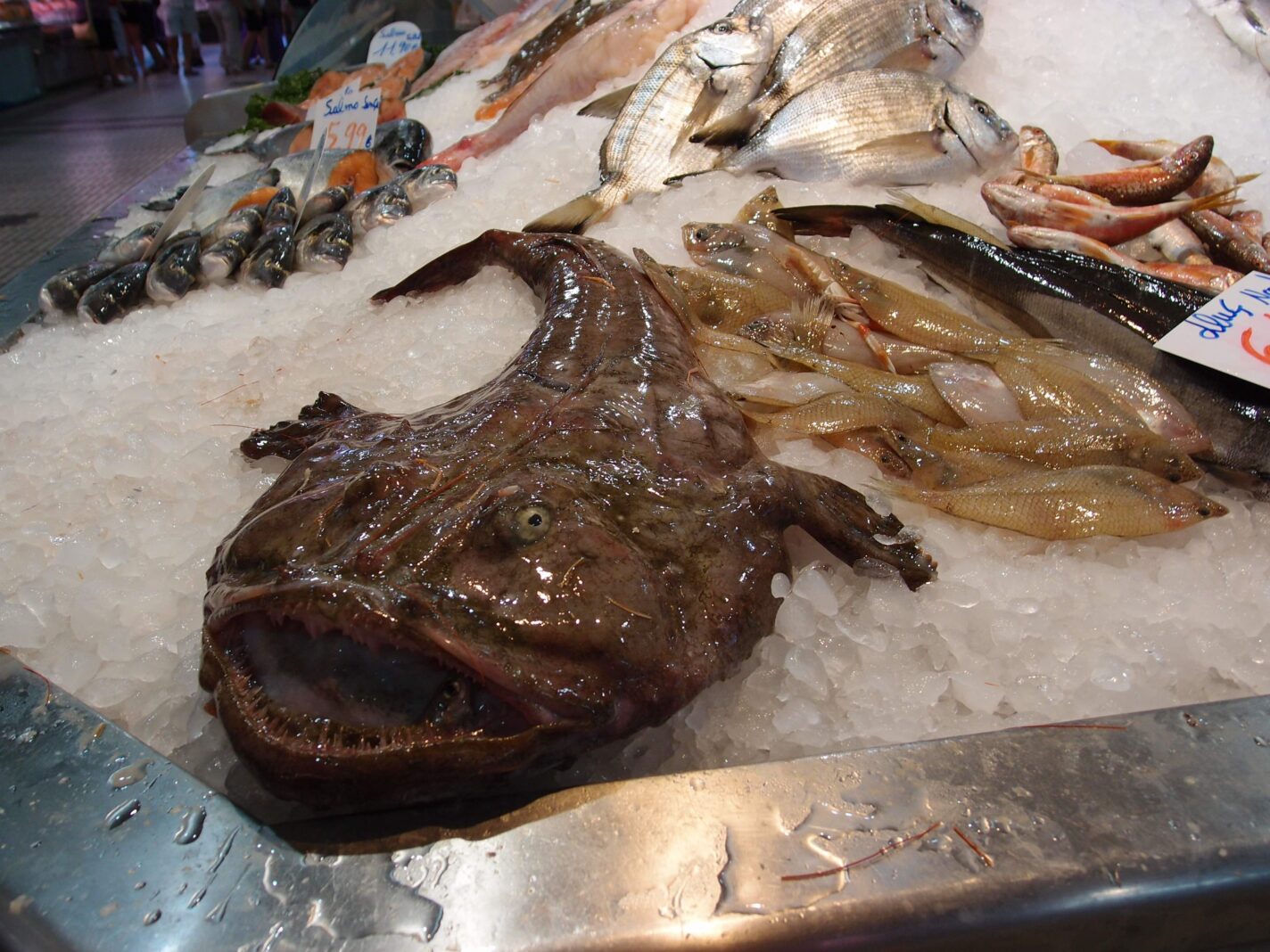
Pictured above: Despite their famously “ugly” reputation, monkfish — a tasty New England species — are at the center of new research bringing fishermen’s knowledge into stock assessments.
What Do Fish Farms Eat?
This report from Greece examines how global fish farming depends on wild fish-based feed. It highlights inequities, with vast volumes of forage fish diverted from West African food systems to feed farmed fish for wealthier markets. (Right click report page to translate to English.)
Cape Cod Fishermen Take Science Offshore to Count Monkfish
This Cape Cod Chronicle article highlights how the Chatham Harvesters seafood cooperative is working with scientists to improve monkfish stock assessments by bringing in real fishing data. It challenges flawed federal methods that misread pandemic-era catch declines as population drops.
First Nations Rally to Save Wild Salmon on Coastal British Columbia
This feauture from the Global Alliance for the Future of Food (GAFFF) highlights how First Nations in British Columbia successfully pushed out salmon farms to protect wild salmon. It shows how Indigenous leadership, paired with science, led to farm closures and early signs of ecological recovery.
Aboriginal Communities Reclaim Sovereignty in Australia’s Northern Territory
This feature, also from GAFFF, spotlights how Aboriginal communities in Australia’s Northern Territory are rebuilding community-owned fisheries and food systems after decades of exclusion. It shows how legal wins, co-ops, and the Aboriginal Sea Company are restoring economic control and food security.
House Committees Hold Hearing on Hazardous Imports Act
This update from the Southern Shrimp Alliance covers a congressional hearing on the Destruction of Hazardous Imports Act, which has support from NAMA and other seafood organizations. The piece highlights concerns about unsafe imported seafood bypassing FDA refusals and entering U.S. markets.